

Solar panels only solve half the equation once the sun goes down. For one homeowner in Pimpama, Queensland, that gap showed up every evening as power bought back from the grid at full price, even though the home's own solar system had already generated more than enough during the day.
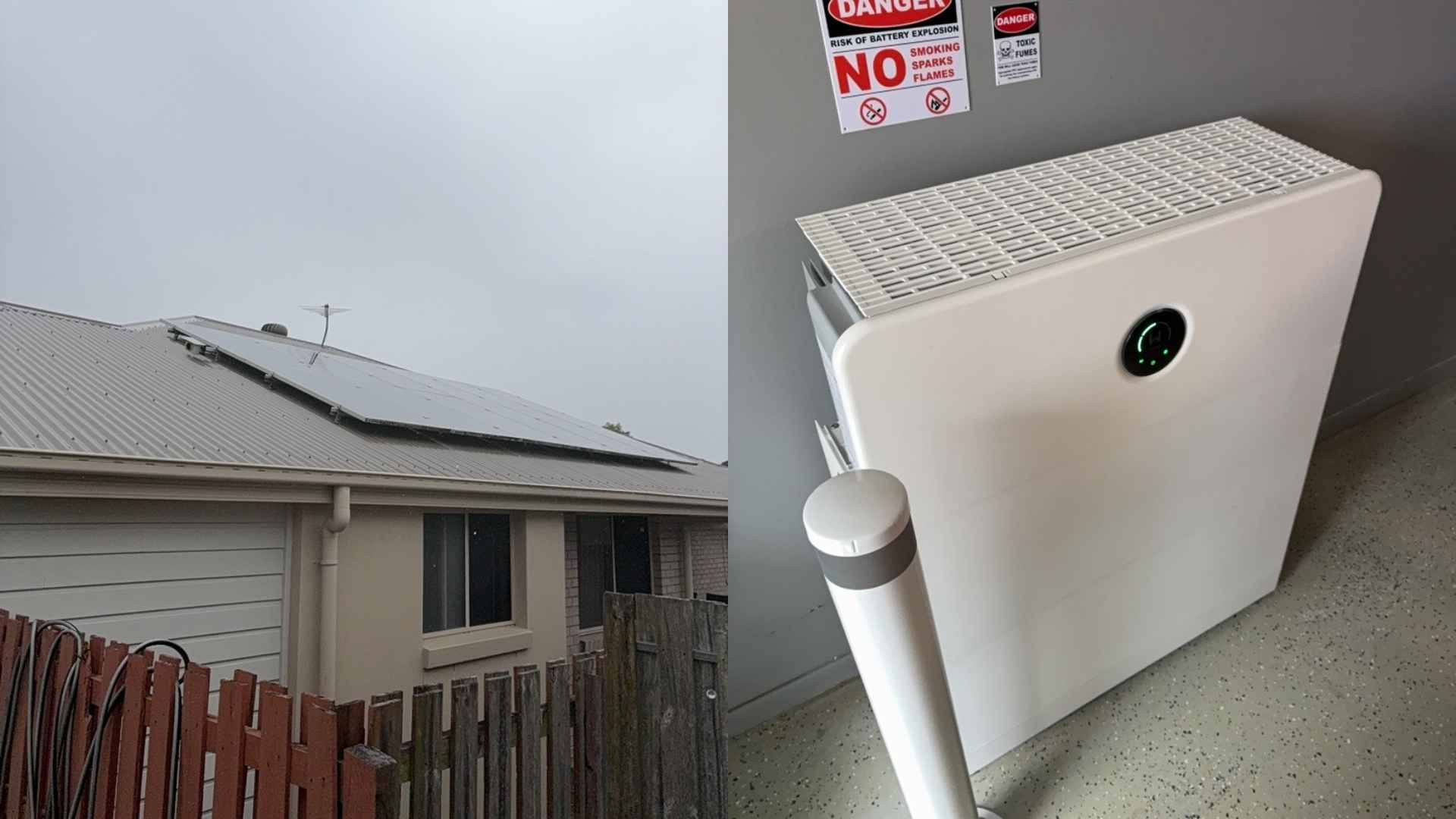
The homeowner in Pimpama already had solar panels installed and had been generating electricity for years, but most of that power was heading straight back to the grid for a modest feed in tariff instead of covering the home's own evening usage. Power bills were still climbing, particularly once the sun went down and the household switched back to grid electricity for cooking, heating and everyday appliances.
Like many homeowners weighing up a battery, there was some hesitation. Stories about oversized systems, unclear warranties and installers who disappear after the sale had made the decision feel riskier than it needed to be. What the homeowner wanted was straightforward: a battery that actually matched the existing solar system, installed by a team who would stand behind the work and explain the numbers honestly.
.jpg)
After reviewing the property's existing solar setup and the household's usage patterns, the team recommended a GoodWe hybrid battery and inverter combination rather than a generic package. Two GoodWe GW8.3-BAT-D-G20 battery units were paired with a GW9.999K-EHA-G20 hybrid inverter, giving the home 16kWh of usable storage. That is enough capacity to carry a typical household through the evening peak on stored solar instead of buying power back from the grid.
The battery system was also configured to be VPP capable, so the homeowner has the option to join a virtual power plant later on if it makes financial sense, without needing any further equipment changes. Every component was sized to the property's actual solar output and usage rather than padded out to increase the sale.
.jpg)
Installation was carried out by a CEC accredited installer and a licensed electrician on 20 July 2026. The battery units were mounted indoors, the switchboard was upgraded with the required isolators and safety signage, and the new system was wired into the existing solar array and household backup circuits.
Once installation was complete, the system was tested and commissioned on site, with the inverter's status display confirming a clean start up and grid connection. A certificate of testing and compliance was issued for the electrical work, and the documentation was submitted to register the system for 103 small scale technology certificates under the federal battery rebate. The homeowner also received a signed retailer statement confirming the battery was correctly sized for the existing solar system and that the installation was complete, connected and ready to use, with no follow up appointments required.
For homeowners across Queensland who already have solar, a correctly sized battery is often one of the most effective ways left to bring a power bill down further. This project shows what that looks like in practice: an existing solar system paired with the right amount of storage, installed by an accredited team and backed with proper compliance paperwork, rather than a battery simply bolted onto a wall.
It also reflects a wider shift happening across the region. As the federal Cheaper Home Batteries rebate and ongoing state incentives make storage more affordable, more households in areas like Pimpama, Ipswich and the Gold Coast are looking to get more value out of the solar they are already generating instead of starting from scratch.
Rethink Green Energy is a family owned, Australian operated solar and battery installer working across Queensland and New South Wales. Every system, whether it is a new solar install or a battery retrofit like this one, is designed around the property's actual usage rather than a generic package. Installations are carried out by CEC accredited installers, backed by a 25 year workmanship warranty, and supported by honest advice with no pushy sales tactics.
The relationship does not end once the system is switched on. Ongoing monitoring, maintenance and battery support mean homeowners have someone to call long after installation day, not just during the sales process.
If the solar panels on your roof are already doing their job but your power bill still does not reflect it, a battery may be the missing piece. Book a free, no obligation assessment with Rethink Green Energy and find out exactly how much storage your home actually needs.
We're your local green energy partners, deeply devoted to brightening our community with sustainable power solutions.
